Lectures on the legal aspects of comics
The autumn season was dedicated to comics: over the course of a single month and at three different venues, Barna Arnold Keserű delivered three lectures exploring the media law, copyright, and trademark aspects of comics — all forming part of a broader ongoing research project.
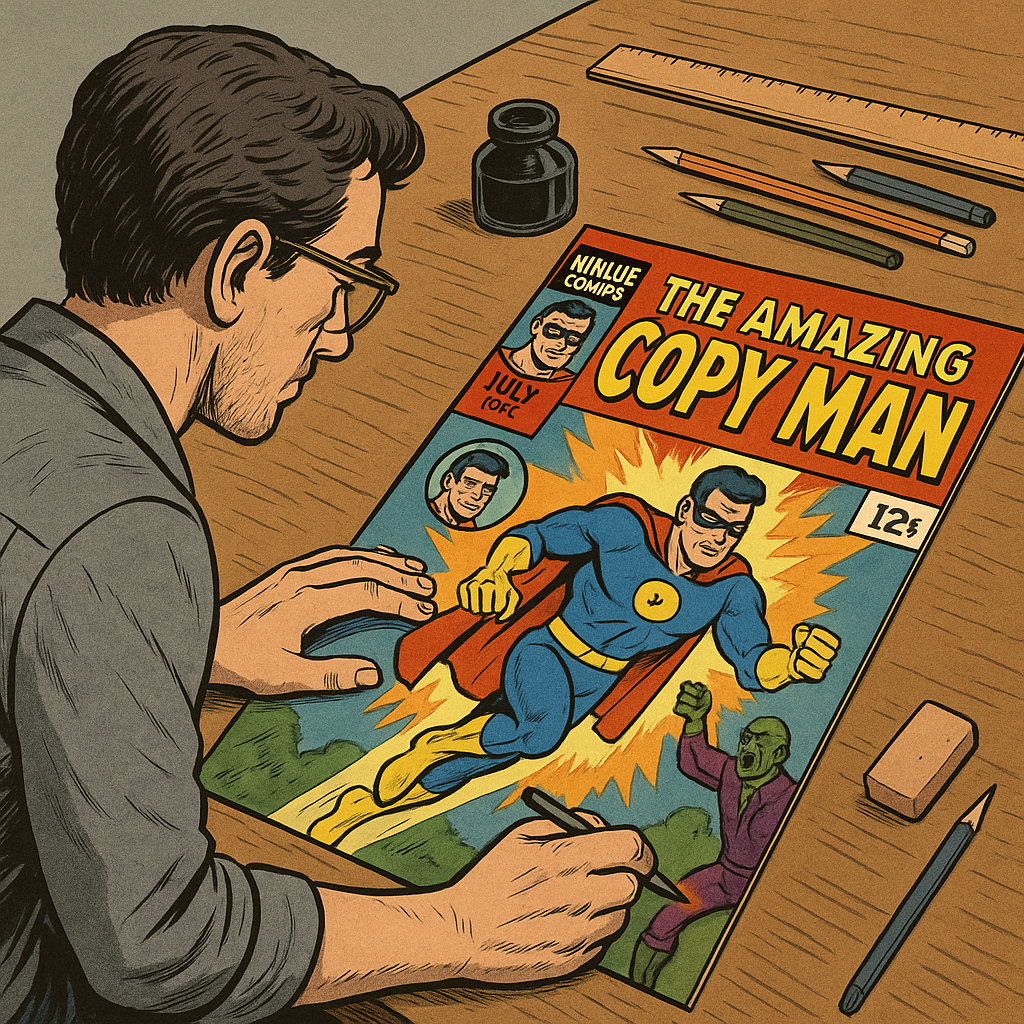
On 26 September 2025, within the framework of the nationwide Researchers’ Night programme, Széchenyi István University welcomed visitors with a series of diverse lectures. The only presentation offered by the Faculty of Law was organized by the Department of Civil Law and Civil Procedural Law, where Barna Arnold Keserű gave a talk on the historical development of comics and the moral panic that surrounded them in mid-20th-century America. By the 1950s, comics had become a hugely popular mass product, provoking suspicion among many. Psychiatrist Fredric Wertham led a crusade against comics, arguing vehemently that they had a harmful influence on minors. In response to public anxiety over the depictions of crime and violence in comics, conservative groups organized comic-book burnings, and in 1954 the American comic book industry introduced the strictest self-censorship in media history, which went on to shape the genre’s evolution for decades.
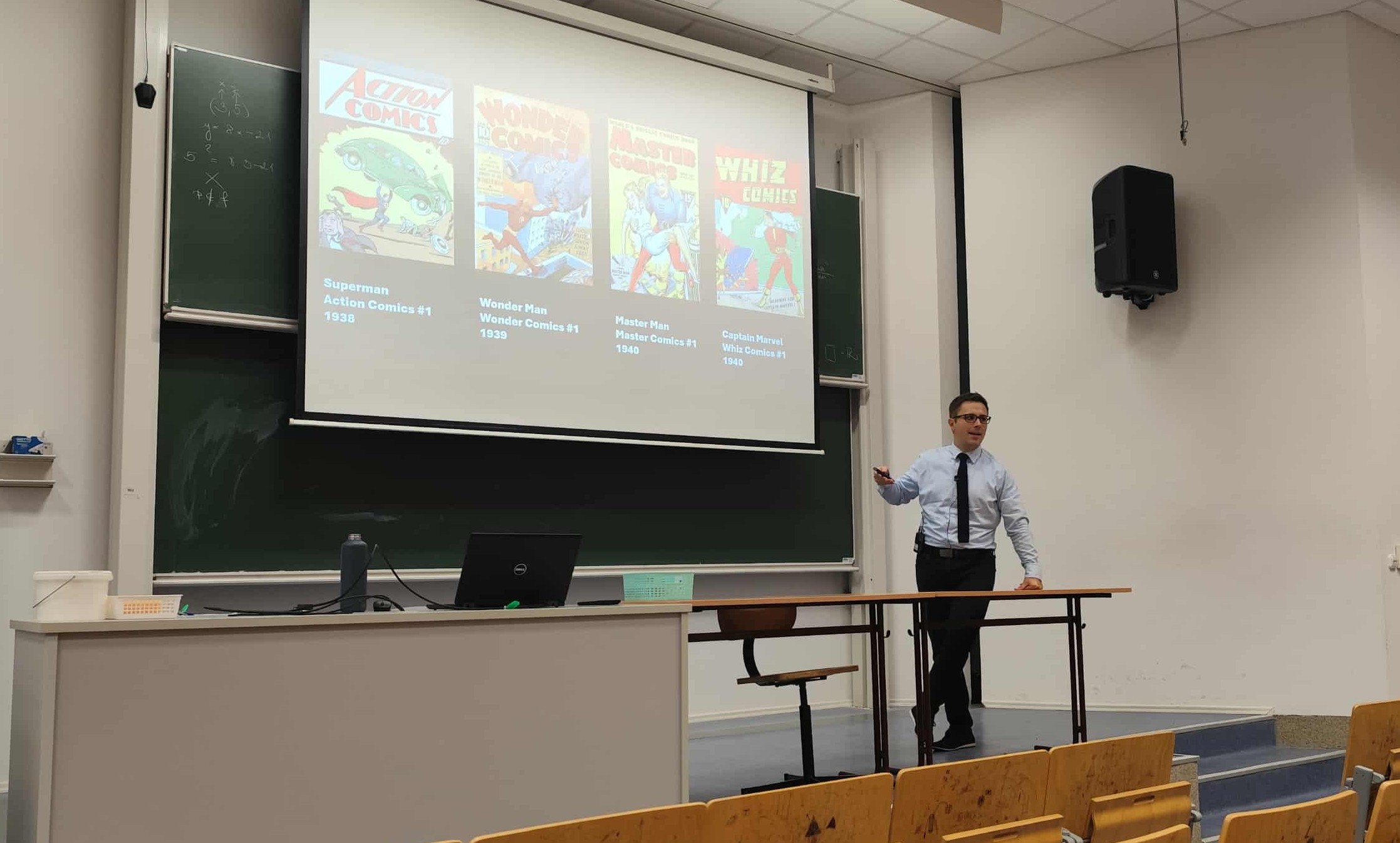
On 3 October, the Budapest University of Technology and Economics hosted the ninth Copy21 Blogshop, an annual forum bringing together academic and professional experts in copyright law. In his presentation, Keserű demonstrated the variety of creative contributors involved in the making of a comic book and examined how their authorship has been recognized (or denied) from both a copyright and media-industry perspective from the early 20th century to the present day. He also discussed the decades-long struggle for authorial autonomy, the gradual overcoming of the work for hire model, and the resulting democratization of the comics industry.

Finally, the research results were also presented at an international conference. The IV Tricontinental Workshop on Intellectual Property, held on 25 October at the University of La Laguna (Tenerife), focused this year specifically on the intellectual property aspects of animated films and comics. Keserű’s lecture addressed the question of whether it makes sense to register comic book characters as trademarks. Both Marvel and DC own more than ten thousand such trademarks; however, the CJEU’s decision in Dr. No (T-435/05 Danjaq v. OHIM) and the EUIPO’s decision in the Terminator case have cast doubt on the usefulness of these marks. In the intersection of copyright and trademark law, such signs are not necessarily capable of indicating commercial origin, and therefore may fail to fulfil the essential function of a trademark. In today’s entertainment industry, however, the possibility of obtaining and maintaining trademark protection is a multibillion-dollar issue of critical importance.